

Why Texas A&M Must Stop Collecting Union Dues
Texas public universities act as free payment processors for progressive unions, subsidizing a pipeline for organizations that funnel tens of millions of dollars into Democratic politics every year.

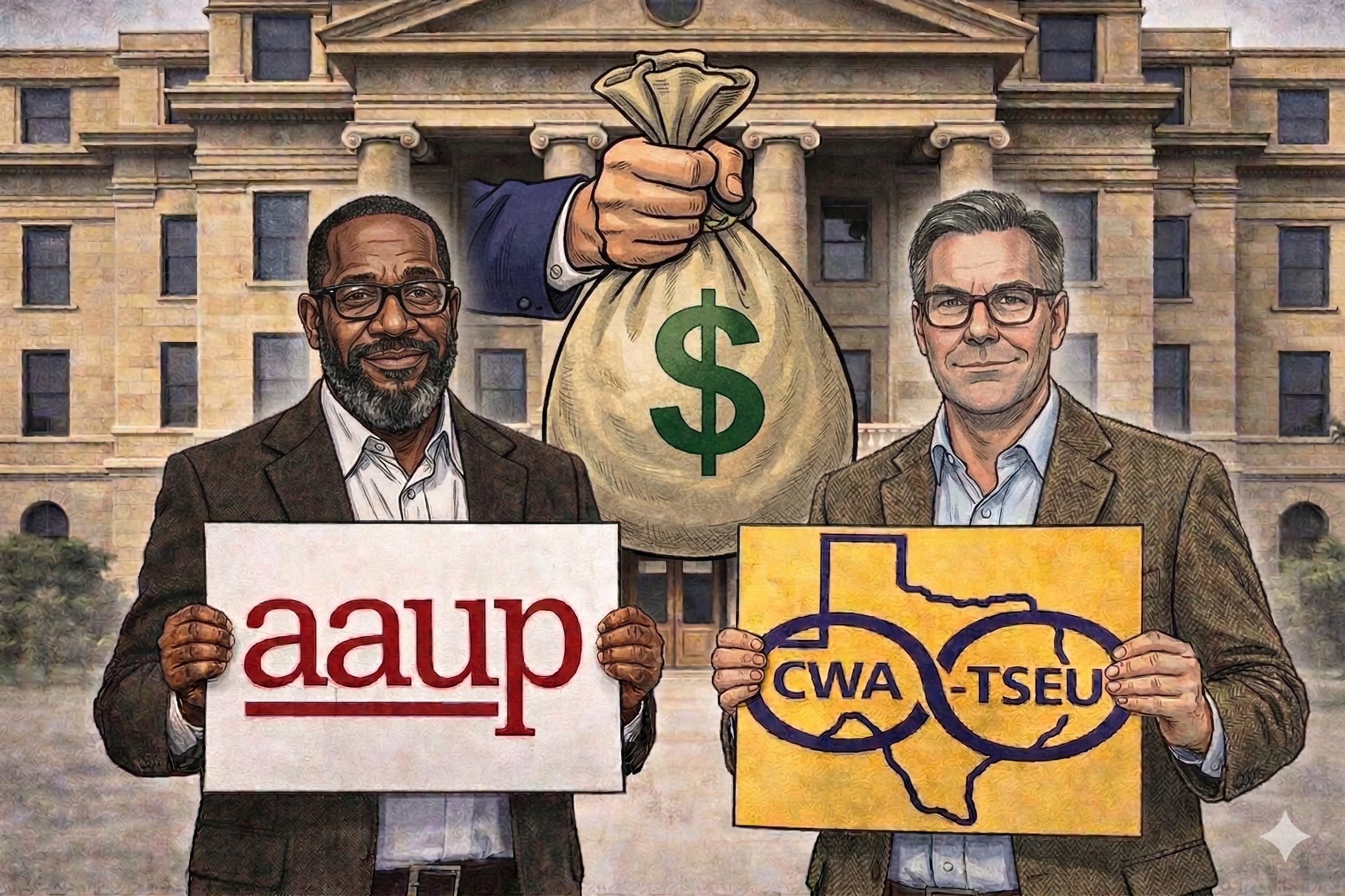
Imagine if a conservative organization, say TPUSA, walked into the next Board of Regents meeting with the following demand: they ask the Texas A&M university system to use their taxpayer-funded payroll software, staff, and time to automatically deduct membership fees directly from faculty bank accounts every month, acting as their “free” payment processing system.
The Regents would reject this request immediately. Using public resources to act as a free collection agency for political groups is a clear violation of public trust. Yet, this exact privilege is enjoyed by progressive labor unions and professional associations, like the American Association of University Professors (AAUP) and the Texas State Employees Union all across Texas public universities.
By using the university payroll system to automatically deduct dues from faculty paychecks, taxpayers are footing the bill for these private groups, saving them millions in administrative overhead.
Legal experts argue this practice violates the spirit of the Gift Clause found in the Texas Constitution. The government is forbidden from giving public resources to private entities without a public purpose. When A&M processes these dues, it is effectively donating its administrative power to artificially prop up private political organizations.
Political money laundering
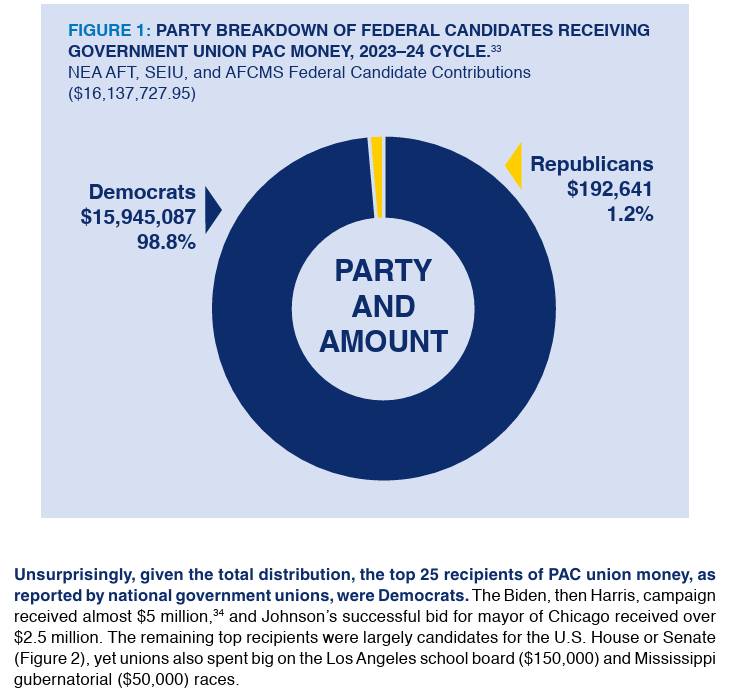
This administrative favor funds a massive political machine. According to a 2025 report by the Commonwealth Foundation, 86 percent of the money spent on national politics by the four largest national public-sector unions came directly from member dues rather than voluntary PAC donations. The partisan split of that spending is undeniable: 95.8 percent of those direct contributions went to Democrats, with just 4.2 percent going to Republicans.
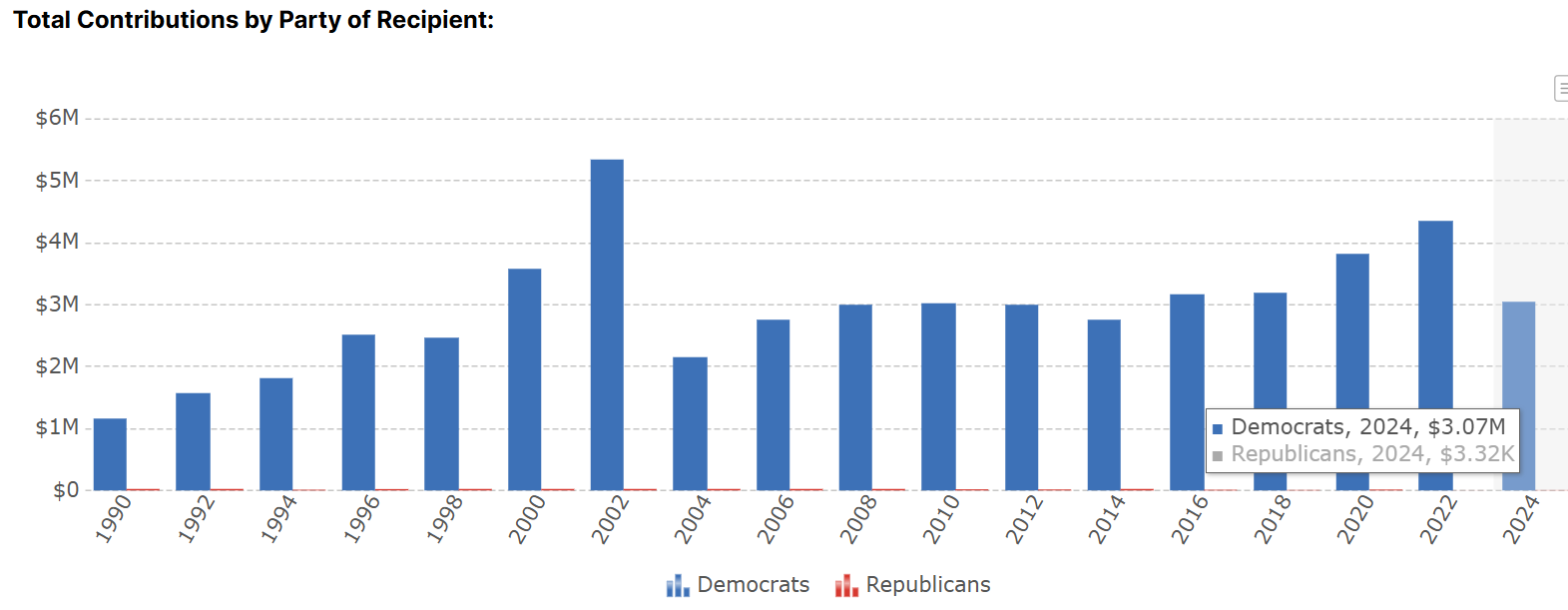
The same pattern holds for the unions operating directly at Texas A&M. In August 2022, the American Association of University Professors merged with the American Federation of Teachers, becoming AFT Local 6741. Dues collected through A&M’s payroll system flow directly to the AFT’s national headquarters, which spent $16.5 million in political contributions in the 2024 election cycle, 99.89 percent of which went to Democrats. This pattern has been consistent every cycle since 1990, according to OpenSecrets data.
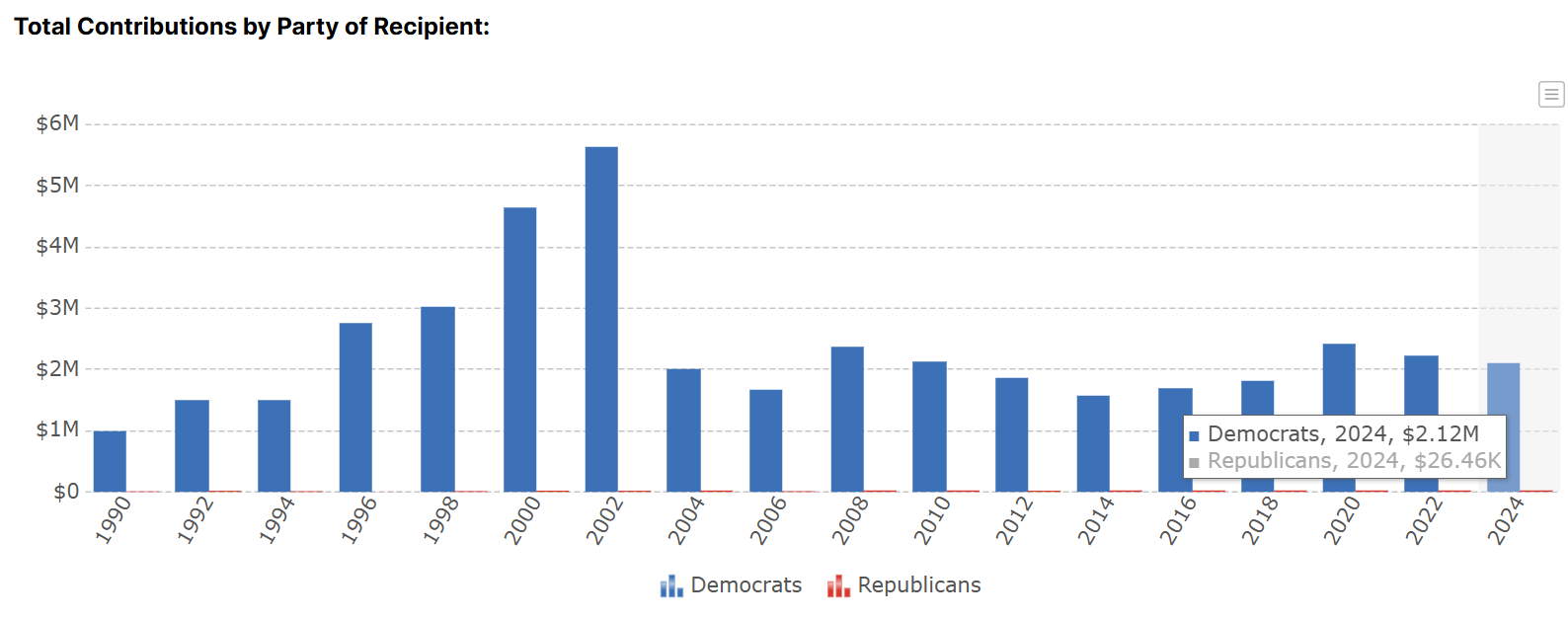
The Texas State Employees Union operates as CWA Local 6186 and routes member dues to the Communications Workers of America (CWA). OpenSecrets data shows CWA contributed $13.9 million in the 2024 cycle, with 98.77 percent going to Democrats.
By providing a free payroll deduction service, Texas A&M is subsidizing both organizations’ primary revenue streams and their political operations.
Funding those who hate us
Locally, Texas A&M is actively subsidizing the exact organizations that support and manufacture political scandals on our own campus. When the state legislature passed SB 37, the Texas chapter of the AAUP released a seven-page document with guidelines urging their members to “resist” their employers’ efforts to hold them accountable for classroom instruction, as reported by the Texas Scorecard.
The $50 million shortfall
When states like Arkansas and Florida banned automatic payroll deductions for unions, those organizations saw their revenues plummet by roughly 33% almost immediately. Many members simply stopped paying when the money was no longer automatically removed from their checks. The Mackinac Center for Public Policy calls this the “apathy gap.”
Applying that same 33 percent drop to the Texas pipeline reveals the true scale of the government subsidy. There are roughly 300,000 public sector union members in Texas. At a conservative average of $500 in annual dues, $150 million is currently being routed through government and university payroll systems every year. If Texas public universities and state agencies stopped acting as free collection agencies, progressive labor organizations would lose approximately $50 million in the very first year.
AFT and CWA together contributed over $30 million in the 2024 election cycle alone, almost entirely to Democrats. Banning this practice in Texas would cut off millions of dollars flowing to these national war chests, simply by ending a free administrative service that Texas taxpayers never agreed to provide.
Time to end the subsidy
During the 2025 legislative session, lawmakers attempted to ban this practice statewide with Senate Bill 2330. The bill passed the Senate but ultimately died in the House, leaving the current permissive laws in place. The Texas Legislature must take this up again in the 2027 session to strip private political organizations of their unearned access to taxpayer payroll systems.
However, Texas A&M does not have to wait for Austin. State law allows this practice, but it does not mandate it. The Texas A&M Board of Regents has the authority to vote tomorrow to stop collecting these dues.
Our university payroll department exists to compensate employees. It should not serve as the collection agency for private associations. If these organizations want to raise money, they should do it on their own dime, with their own software, and on their own time. It is time for the Board of Regents to cut the cord.