

Five Quick Arguments for Capitalism
Why capitalism is not greedy, but the default setting of human nature, the epitome of "live and let live," and the only path to a truly free society.

During a casual debate with my friends not long ago, I was confidently presenting my case for freer markets, as I always do, until one asked me to define “capitalism” in a single line. My dad has always instructed me that when talking to skeptics, it suffices to substitute the term with “innovation,” and while that works surprisingly well, I felt the concept ran much deeper. Over the past year, I realized that true capitalism is not an invented system but the default economic system of human nature.
What follows are the core elements I distilled after much thought, not as a defense of the regulation-ridden, quasi-socialist hybrid we currently mistake for capitalism, but an effort to articulate the timeless, universal principles of the real thing.
The only system consistent with individual rights
If you start from the premise that every human being possesses the natural and absolute right to life, liberty, and property, then it simply follows that only a system grounded in voluntary exchange can represent the non-negotiability of those rights.
The moment any form of coercion enters the picture, be it a mob, a mafia, or a government, those rights are no longer inherent and inviolable, but conditional, essentially on loan from the state. Without the violations of taxation, regulation, and conscription, people remain free to build and trade on their own terms. This is simply what it means to have inalienable, individual rights as the starting point of any moral order.
Capitalism is built on the “economic means” instead of the “political means.”
Sociologist Franz Oppenheimer described two ways to acquire wealth: the economic means (working, trading, giving, helping) and the political means (theft, robbery, coercion, conquest). Genuine capitalist exchange is built entirely and exclusively on what he called the economic means.
On the other hand, the state is entirely built on the political means. So, when I use the term capitalism, I am referring solely to the moral economic means; anything gained through coercion is simply, by definition, not capitalistic. The political means only seize and reallocate wealth; they don’t create it. True wealth is only created through the economic means, never through force.
As Javier Milei put it in his speech at Davos: “The state does not create wealth; the state destroys it. The state can give you nothing because it produces nothing, and when it attempts it, it does so poorly.”
The famous “double thank-you-moment” and scale
Capitalism creates what John Stossel famously calls the “double-thank-you moment,” where both sides thank each other because both sides benefit. In capitalism, by definition, no one benefits at the expense of another since all the economic transactions are voluntary. This is the most profound aspect of capitalism; two people create new value from essentially nothing, and that dynamic always holds, no matter how large the economy becomes.
In contrast, every alternative economic system relies on some degree of armed coercion, theft, and violence under the euphemism of “wealth redistribution”. and have historically always fallen apart because, as Margaret Thatcher put it best, “you eventually run out of other people’s money“.
Capitalism outperforms the alternatives because the same win-win logic behind a simple trade between two consenting individuals is the exact same principle behind the remarkable prosperity that emerges when the economy scales up to a macro level.
Capitalism does not need to be enforced
Following from that, another profound quality of capitalism is that it doesn’t need to be enforced by a central authority; it works on its own. If two people both have something the other wants, they simply trade. There is no great machinery or bureaucracy needed to force or authorize a natural, voluntary, human exchange. All that is required to set a market economy in motion is the basic impulse for improvement and innovation that all of us inherently have as human beings.
It allows for voluntary alternatives to coexist
Finally, capitalism is the only economic framework that allows coexistence with every other economic arrangement for anyone who actually wants to live that way. Be they communes, socialist commonwealths, or worker co-ops, capitalism doesn’t require suppressing alternatives, and, as mentioned above, cannot suppress them without ceasing to be capitalism since suppression requires coercion.
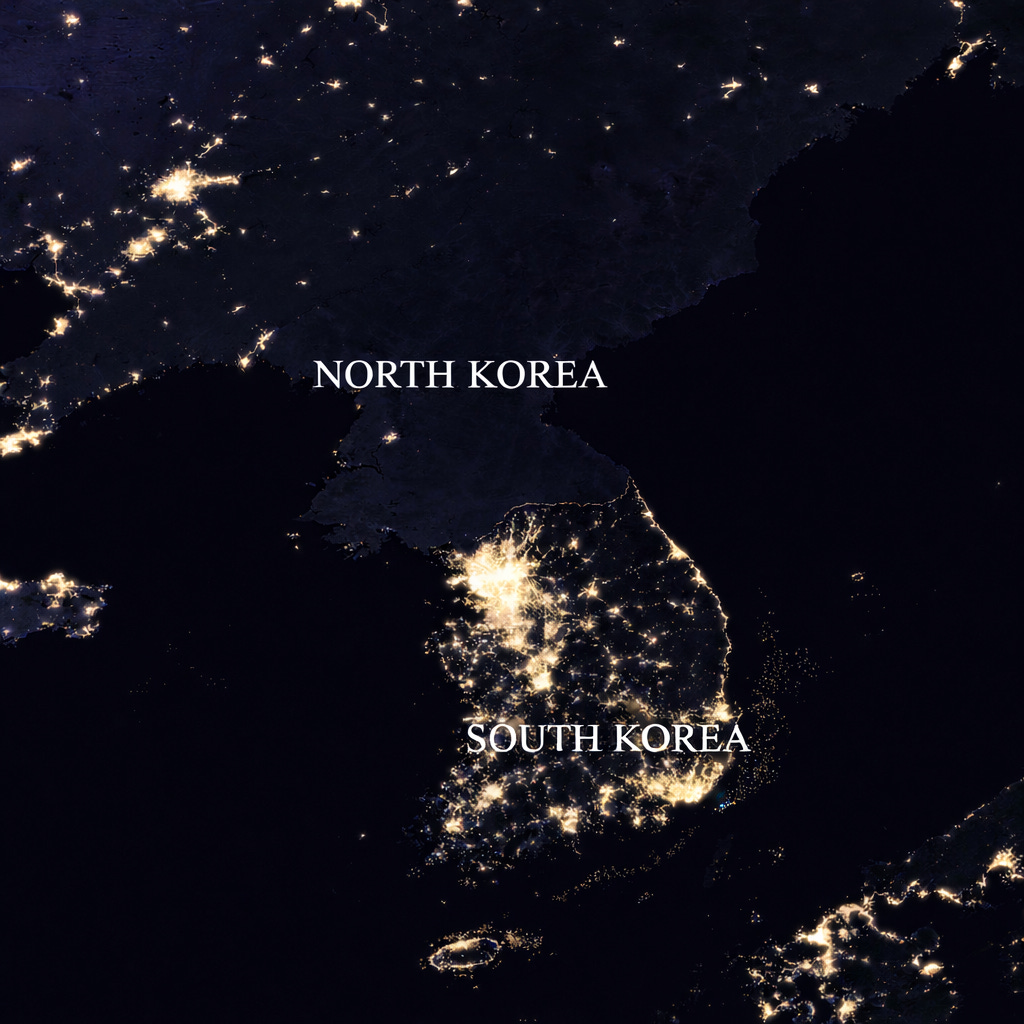
Such arrangements are compatible only if people join by choice. If alternative systems were actually superior, they wouldn’t need any sort of coercion to convince people; people would opt in immediately. But as history made clear in 1989, people run to the free world when the wall comes down; every other system needs a wall to keep people from leaving.
Closing thoughts
Capitalism shouldn’t be a nebulous term. It is simply and beautifully the natural, logical extension of human action, i.e., the default setting of humanity, and the only manner in which wealth increases and innovation skyrockets. And once you see it that way, it becomes very hard to unsee.
So to all the communists, please just let us “live and let live”.
 | A guest post by
|