

Can We Trust The New Testament?
You’ve heard the claims: “You can’t trust the Bible, it’s been corrupted” or “it's just a translation of a translation of a translation…” or even “The Bible didn’t exist until 325 AD". Is this true?

How do we know if Caesar crossed the Rubicon? If Alexander the Great conquered Persia? Or if Genghis Khan was a real historical figure? I don’t know about you, but I simply trust that the ancient books describing these events are generally factual, and I trust history nerds to keep the truth intact.
But when it comes to the Bible, people are way more skeptical. And rightfully so! Because the Bible, though it is a historical text, makes supernatural claims. Namely, that Jesus is God because He effected many miracles, most importantly His resurrection from the dead.
One of the ways that history experts, literary critics, archaeologists, and linguists try to understand a book’s historicity (the truth of its historical claims) is through textual criticism. This involves studying and comparing ancient manuscripts of the text in question in an attempt to reconstruct the original, whether it be the New Testament, Caesar, Alexander the Great, Homer, Plato, Aristotle, or the Quran.
Textual criticism is a vast topic that takes years of study across a variety of disciplines. Mastering it often requires knowledge in history, the Greek language, Church Fathers, manuscript families, scribal patterns, and more. In this article, my goal is to compile the most relevant and useful information in a manner that is understandable and beneficial for the average Christian.
The sheer volume of the evidence
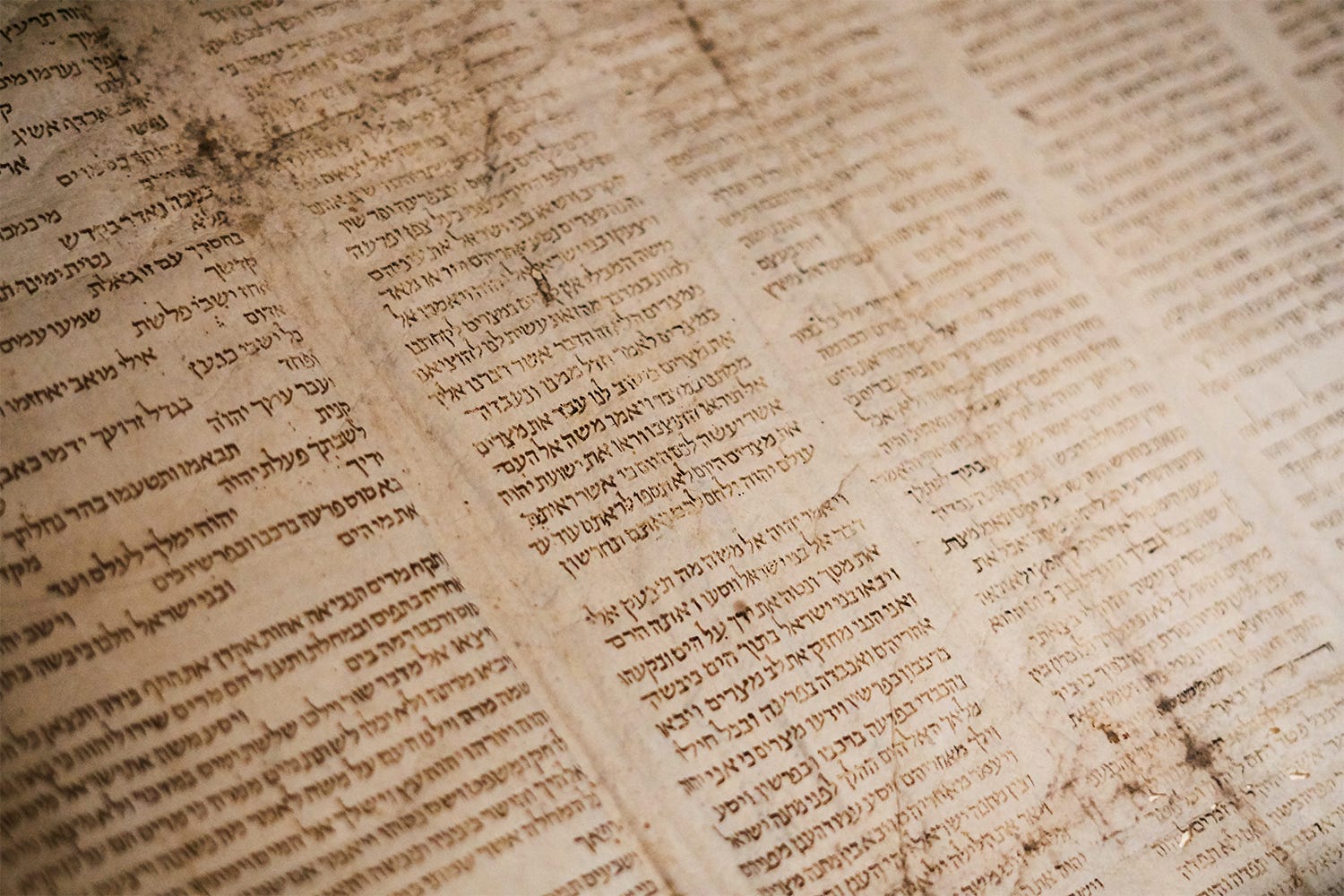
When we talk of manuscripts, we are referring to handwritten copies, as we do not possess any of the original writings of the New Testament or any other ancient authors. However, the sheer volume of surviving biblical manuscripts is unprecedented and utterly unmatched by any other book in history.
While the original texts of the New Testament were written in Koine Greek, we have approximately 25,000 early New Testament manuscripts preserved across at least 11 main ancient languages. The most prominent languages in the manuscript record include:
Greek: Over 5,800 manuscripts.
Latin: Approximately 10,000 manuscripts, including both Old Latin and the Vulgate.
Syriac: Roughly 350 to 9,300 manuscripts, including the Peshitta.
Coptic: About 3,000 manuscripts, primarily in the Sahidic and Bohairic dialects.
Armenian: More than 2,000 to 3,325 manuscripts.
Old Church Slavonic: Roughly 4,000 manuscripts.
Ethiopic (Ge’ez): At least 600 manuscripts.
Other Ancient Languages: Smaller numbers exist in Georgian, Gothic, Arabic, Nubian, and Persian.
To put this in perspective, New Testament scholar Dan Wallace estimates that if we stacked up all the New Testament manuscripts, it would equal the height of four and a half Empire State Buildings.
The closest runner-up in terms of the number of manuscripts is Homer’s Iliad, of which we have close to 2,000. For Caesar’s Gallic Wars, we have 10 to a dozen known existing early manuscripts. These surviving copies are dated significantly later than the original, with a gap of nearly 1,000 years. But I bet you’ve never even questioned the fact that Caesar did fight in his Gallic Wars. The point is, how can we believe Caesar did so, and that Alexander did conquer Persia, but not believe in the historicity of the Bible?
The timeline of preservation
Another critical data point is how close the earliest copies are to the originals. For other works from around the New Testament time period, such as Homer, Plato, and Tacitus, there is an average gap of 500 to 900 years between the original and the earliest copy.
For the New Testament, that gap is drastically smaller. The earliest Greek manuscript of the New Testament is a small manuscript piece called P52, which contains portions of John 18 and is dated to as early as the year 125 AD.
This discovery was incredibly significant. Before P52 was discovered, some scholars would date the gospel of John to after the first century, some as late as 150 AD. The discovery of P52 pushed the date back into the first century. John was originally written in Ephesus (modern-day Turkey), while P52 was discovered in Egypt. This means the gospel of John was copied and made its way all the way from Turkey to Egypt within just a few decades, leaving only about a historically unprecedented 35-year gap between the original and the earliest surviving copy.
Other notable manuscripts include P66 and P75, both dated around the 200s, which contain large parts of the Gospels. The four great codices (meaning bound books as opposed to manuscripts), known as Codex Vaticanus, Codex Sinaiticus, Codex Alexandrinus, and Codex Ephraemi Rescriptus, are dated to the 4th and 5th centuries and contain substantial portions of the Old and New Testaments.
The Dead Sea scrolls
And for the Old Testament, we used to consider them more unreliable and corrupted until something out of a movie happened in 1947. A teenage Bedouin shepherd named Muhammed edh-Dhib was searching for a lost goat in the cliffs of Qumran. He tossed a rock into a dark cave, hoping to scare the animal out, but instead heard the unmistakable sound of breaking pottery. When he and his cousins went inside, they found several tall clay jars. Most were empty, but one contained seven ancient leather scrolls wrapped in linen and sealed with pitch (tree resin). They didn’t realize their value, so the Bedouin reportedly hung the scrolls from tent poles for a while and eventually sold them to an antiquities dealer in Bethlehem for a few cents. Eventually, when a Hebrew University Professor called Eliezer Sukenik examined some of these scrolls in 1947, he realized they were written in beautiful biblical Hebrew and were over 2,000 years old, which was at least 1,000 years older than any known biblical text at the time. Once word got out, a frantic race began between Bedouin treasure hunters and professional archaeologists. Between 1947 and 1956, a total of 11 caves were uncovered, containing roughly 900 manuscripts.
This incredible finding proved that the Old Testament has stayed virtually unchanged for 1,000 years. When researchers compared the modern Hebrew Bible to the scrolls found in the caves, they found they were 95% identical word for word. No other ancient book in history has been preserved with that level of accuracy.
The 5% remaining textual variations
But what about the remaining 5%? It is this small number of variations that some skeptics, like Bart Ehrman, often point to. They say that there are 400,000 variants, that when you have scribes hand-copying a text, there will be significant differences or variants in their manuscripts. The New Testament has about 135,000 Greek words, meaning on average, there are three variants for every word. Sounds quite problematic, right?
However, what they fail to mention is that these 400,000 textual variants do not affect meaning. Over 99% of textual variants are simply spelling or grammatical errors. The less than 1% that do affect the meaning of a text do not affect any major doctrine. Even if a variant did affect doctrine, Christians can point to other passages that teach the same established truths.
To demonstrate this point, let’s say we have three manuscripts, A, B, and C, and we are trying to find what the original said.
For the 99% of variants, it looks like this:
Manuscript A says: God ___ lovin.
Manuscript B says: ___ is loving.
Manuscript C says: Gud i s oving.
Despite bad spelling and missing words, we can easily identify that the original said, “God is loving.” You can imagine how a scribe copying a manuscript in a poorly lit room while in constant fear of persecution could make simple errors. Other harmless variants include occasional word order changes, which are flexible in Greek and do not affect meaning, or the use of early abbreviations for sacred names like God and Jesus.
For the less than 1% of variants, it looks like this:
Manuscript A says: God is loving.
Manuscript B says: God is merciful.
The textual variant here does affect meaning. Is God loving or merciful? This is what is meant by no major doctrine being affected. Whichever manuscript we choose will still reflect what Christians believe.
When we face a variant, we should ask if it is meaningful (does it change the meaning of the text?) and viable (is it early and widespread enough to possibly be in the original?).
A non-viable variant occurs if a verse only appears in manuscripts after the tenth century, for example. One example of a non-viable variant is 1 John 5:7 to 8, which gives us the closest we get to a definition of the Trinity in a single verse. Because this verse does not appear in our earliest manuscripts, it is identified as being added later and is often rejected by modern scholars, though the Trinity is easily proven without it. Finding a variant that is both viable and meaningful is incredibly rare.
Corruption allegations
The Bible is often misunderstood as being transmitted through a “telephone” game, where a message is completely distorted by the time it reaches the last person. This is not the case. The better picture is multiple people starting with a message and passing it along to many others simultaneously in writing. It would have been impossible to corrupt it, given the sheer number of manuscripts that were spread out across geographical locations. There was no point in history when one person or group gathered every manuscript to make a unified change. Any attempt to do so would have been immediately identified by the other thousands of circulating manuscripts.
Conclusion
The claims that the Bible is untrustworthy or corrupted are resolved by historical data. The allegation of the Bible being a translation of a translation is corrected by the massive number of Greek manuscripts from which we translate directly into modern languages. The claim about the Bible not being created until later is easily refuted by the extensive evidence of many earlier manuscripts.
When we speak of the Bible as we have it today, immense research of manuscripts in over a dozen languages has led us to reconstruct the originals with 99.6% accuracy. The remaining inaccuracies are irrelevant, since they do not alter important teachings. Scholars of textual criticism are extremely confident that we possess the original writings of Matthew, Mark, Luke, John, and Paul, and that overall, the Bible is the most historically reliable text of antiquity.
Today, the Bible is recognized by Guinness World Records as the best-selling and most widely distributed book of all time. With estimates of 5 to 7 billion copies distributed, translated into over 700 languages, it consistently remains a top-selling book annually. The ancient evidence simply backs up this enduring modern reality.
The Bible is the greatest and most influential book in the history of humanity.
Why don’t you dust yours off and give it a read?
 | A guest post by
|